

You’re Not Bad at Art
A small but not insignificant example of how the mainstream school system stifles creativity from the tender age of three

I recently took my three-year-old daughter to a school-run playgroup for the first time. We’re usually on the road full-time, surrounded by other travellers or meeting locals at regional playgrounds, but we’ve been somewhat stationary in my hometown for the last month, so we decided to give it a shot.
A few things to note for context:
We are currently homeschooling our six-year-old (registered in the system but following our own child-led “curriculum”).
We’ve been full-time travelling for almost my entire parenting career, so I sometimes feel naïve about topics encountered in “regular” life.
The school I’m referring to is the very one I attended for my final three years of primary school. Outwardly, I thrived there, loved it, was even school captain. The school motto is Strive to succeed—refer to the next point.
Since raising children, I’ve realised many of my insecurities around self-worth and creative potential stem from my school experience—feeding into my people-pleasing tendencies and basing my self-worth on achievements, grades and deadlines.
I haven’t held extreme views on traditional schooling vs alternative approaches (at least, not until recent events). Like most things in life, both have pros and cons, and education requires a nuanced approach based on lifestyle and the child’s needs.
The story…
It’s Harmony Day, a day to celebrate Australia's cultural diversity and foster a culture of belonging. We sit down at a little activity table adorned with paints, markers, and paper plate-sized circles, each picturing a chain of children holding hands around an empty space in the centre—where the child’s painted hand print is meant to go.
My daughter sits down and starts colouring in (pink, always) the outer circle of children. As a bossy three-year-old does, she insists I continue colouring while she moves on to drawing an intricately designed sun to fill the empty centre space.
It. is. beautiful.
A diverse group of children linking hands around bright pink rays of sunshine—profound.
Feeling quite chuffed, she beams as the teacher walks over to see how we’re getting on.
“Oh wow. Are you ready to add your hand print to the middle?”
“No thanks,” Grace replies politely.
I jump in to explain that she’d already done handprints on that cardboard box earlier and didn’t like the feeling of the paint on her hands.
The teacher sits down at our table. “Come on, let’s add your handprint,” she urges, pulling over the tub of paint.
“No thank you, Grace doesn’t like the feeling of the paint. She drew a sun instead.”
The teacher lowers herself down to my daughter’s level, her tone gentle but persistent. “OK, then let’s trace an outline of your hand with this marker.”
Before I realise what’s happening, the teacher grabs Grace’s hand, holding it down over her sun, and swiftly traces around her tiny fingers.
Grace pulls her hand away, confused.
We look at each other in disbelief as the teacher continues shading in the handprint so that my daughter’s sunshine is almost unrecognisable.
(How’s that for a metaphor. I’m crying just thinking about it.)
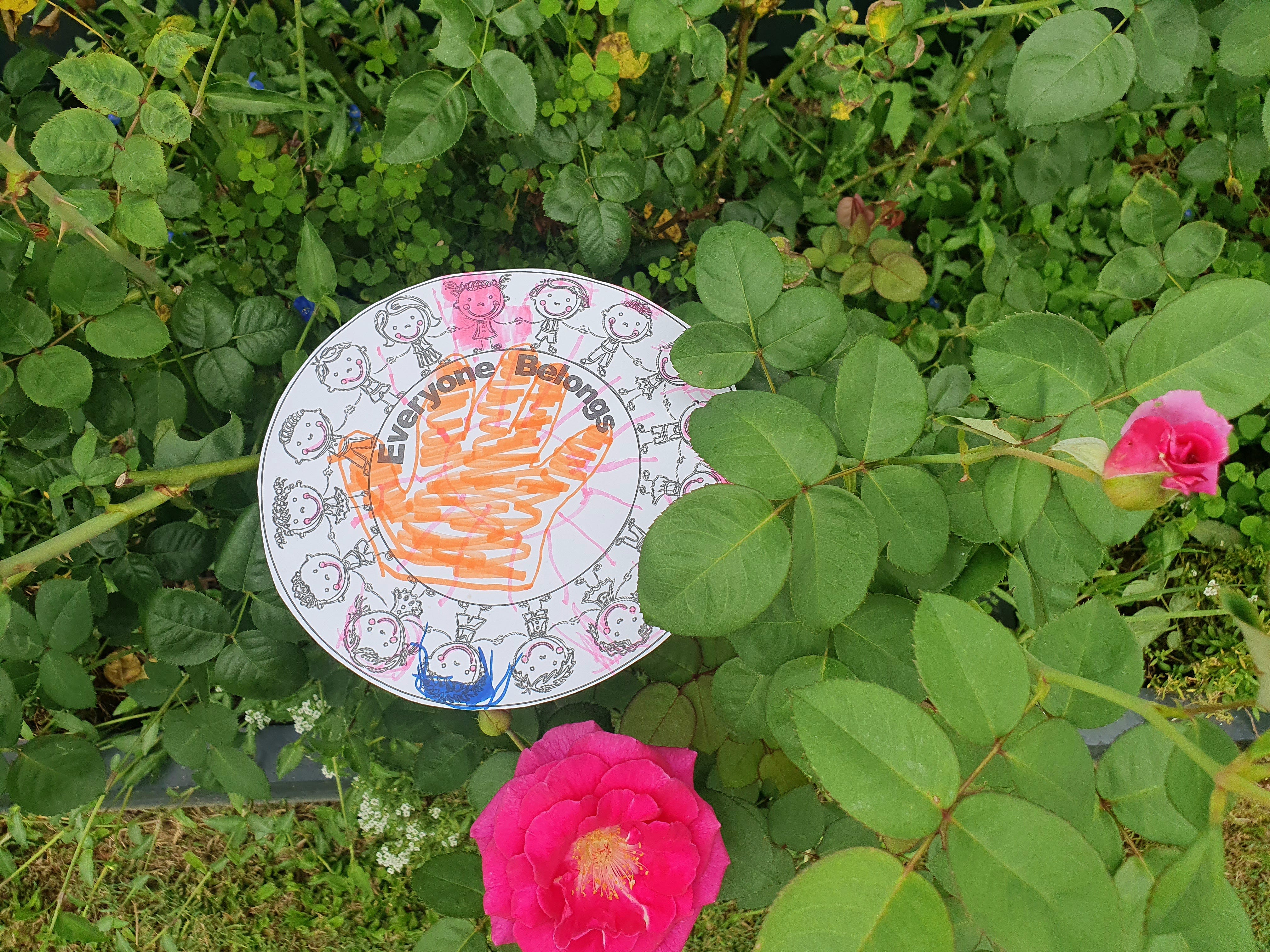
Bless her, Grace reaches for a blank paper circle to start again. It’s clear she’s not impressed, and despite not wanting to make a scene, she insists on recreating her sunshine. Understandably.
The teacher steps in again, saying it’s one per child but she’ll go and get some blank paper for Grace to free-draw on. Grace ignores her, determinedly recreating her original design. I’m so proud of her. I shrug my shoulders and let the teacher battle her own feelings of lost control before she sulks over to a (hopefully) more compliant mother-son duo.
Creative prison (the original title for this post)
If you’re still failing to grasp the connection between this harmless incident, my outrage, and how the school system is repressing our creative expression from the tender age of three, let me spell it out for you.
When we dismiss or straight-out overrule a child’s creativity, they begin to question their own ability to think independently and trust their creative urges.
It sets the expectation that there is a right way to do ART, and deviation is to be corrected, not celebrated.
Multiply this by 13+ years of schooling, apply it across subjects, and you end up with children (and then adults) who second-guess their ideas, fear getting things wrong, and measure their worth by compliance rather than curiosity and self-expression.
We end up with adults who think they’re bad at art (ps. you’re not.)
If we truly want to foster a culture of belonging, we need to honour and respect the uniqueness of each of our children—especially in their creativity. Listen to their ideas. Provide guidance and inspiration. Watch them flourish.
I don’t know why I didn’t say anything at the time, why I didn’t step in to stop the madness. I guess I wanted to see how it played out. Maybe I was paralysed in disbelief. Do you know that feeling?
I see a lot of myself in my daughter, but I also see a natural tenacity in her—a quiet confidence that says, Thanks for your input, now you can kindly go F yourself. I hope to nurture this.
Have you had a similar experience? Perhaps an alternative reflection on the situation? Let’s discuss!
Stay curious and kind,
Simone
Sounds like the teacher had a specific plan in mind but was so stuck inside her own box that she couldn't appreciate a beautiful deviation from the plan.